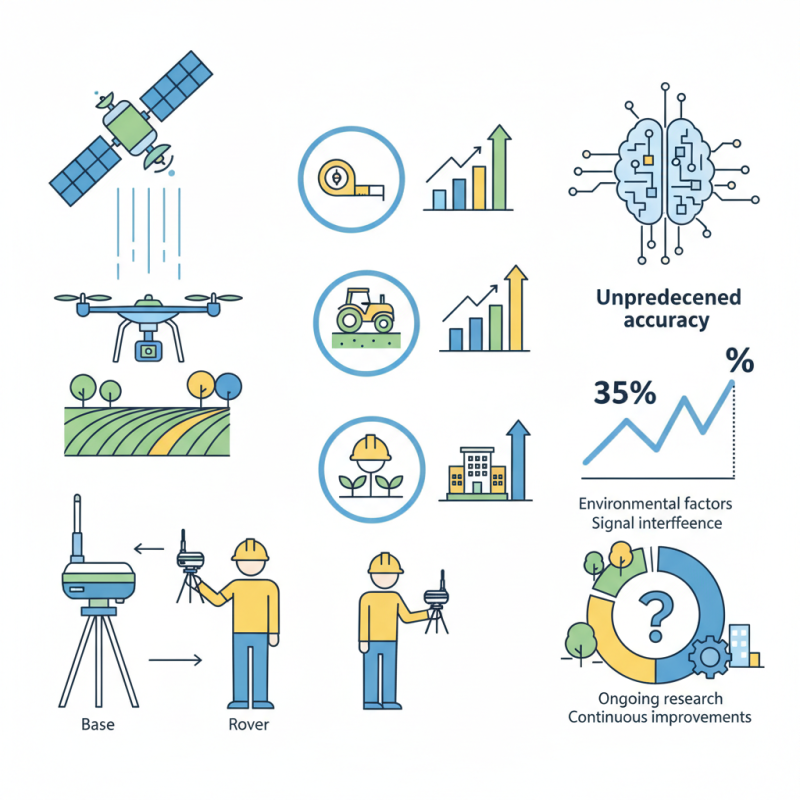
Mini Rtk Gps tech has really changed the game when it comes to precision work in like, pretty much any industry. I recently came across a report from the International Journal of GPS Technology, and it said that the demand for super accurate positioning systems has shot up by about 35% over the last five years. That’s a huge jump, and it kinda shows just how much people are counting on Mini RTK GPS for stuff like surveying, farming, and construction projects.
Dr. Sarah Thompson, who’s pretty much a go-to expert on geospatial tech, mentioned that "Mini RTK GPS offers unprecedented accuracy in mobile applications." Honestly, that really emphasizes how capable these little devices are — especially in situations where regular GPS might not cut it. As folks look for more flexible, compact options, it’s clear that size and precision are the big wins.
Of course, it’s not all smooth sailing. There are some hurdles to overcome. The performance of Mini RTK GPS can definitely change depending on where you are — like, if there are a lot of obstacles or signal interference, it can mess with the accuracy. Researchers are still working on making these systems more reliable across different environments. Still, with ongoing improvements, I think Mini RTK GPS has a lot of potential. As industries keep evolving, the need for precise and portable positioning tools is only going to become more important.
What is Mini RTK GPS?
Mini RTK GPS, or Real-Time Kinematic GPS, is a cutting-edge technology transforming the world of precision applications. These compact devices provide centimeter-level accuracy in positioning, making them ideal for various fields, including agriculture, surveying, and drone navigation. According to a recent industry report, the global RTK GPS market is projected to reach $3.5 billion by 2025, reflecting a growing demand for precise location data.
The working principle of Mini RTK GPS relies on a network of fixed base stations. These stations send corrections to the GPS receivers, enhancing their accuracy. Many Mini RTK systems can achieve accuracy within 2.5 cm, which significantly reduces errors in measurements. For instance, in crop monitoring, farmers can optimize planting patterns and irrigation based on accurate location data. However, challenges like signal obstructions can still affect performance in dense urban areas.
Despite its advancements, Mini RTK GPS technology has limitations. Users often face difficulties with satellite visibility under tree canopies or in mountainous regions. Moreover, the dependence on a reliable communication link can introduce latency or outages. In some cases, operators may require additional equipment to boost signal reliability. As this technology evolves, continuous reflection on its implementation and limitations will be crucial for maximizing its potential.
Key Features of Mini RTK GPS Technology
Mini RTK GPS technology offers high precision location data for various applications. This compact version of Real-Time Kinematic (RTK) GPS delivers centimeter-level accuracy. It does so by utilizing satellite signals in real-time, making it ideal for surveying, agriculture, and drone navigation.
Key features of Mini RTK GPS include a lightweight design, enabling easy transport and installation. Many models have built-in connectivity options, allowing them to communicate seamlessly with other devices. This is great for users needing real-time data in challenging environments. In addition, some units come with integrated batteries, enhancing usability in the field.
Tips: Always check the battery life before heading outdoors. A fully charged device ensures accuracy throughout the day. Also, ensure clear visibility to the sky. Obstructions can lead to signal loss, affecting precision. Recognize that using Mini RTK GPS may require initial calibration. Spend time on this step to optimize performance and avoid frustration during critical operations.
How Mini RTK GPS Works: A Technical Overview
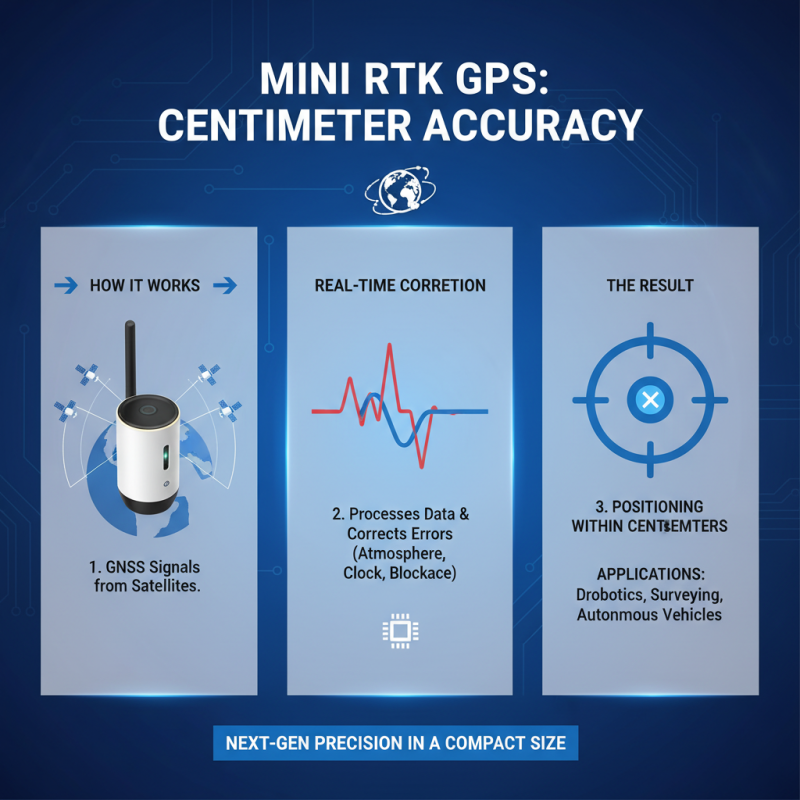
Mini RTK GPS technology represents a significant advancement in the field of positioning accuracy. This compact system utilizes the Global Navigation Satellite System (GNSS) to achieve remarkable precision in real-time. By processing signals from multiple satellites, it can correct errors caused by atmospheric conditions, satellite clock issues, or signal blockage. The result? A positioning accuracy that can reach within centimeters.
At the core of Mini RTK GPS functionality is a method called Real-Time Kinematic (RTK). This technique involves a base station transmitting correction data to a rover unit. The rover processes these corrections alongside its GNSS data. The complexity of satellite orbits and signal interference can sometimes lead to inaccuracies, requiring careful calibration. Yet, the advantages often outweigh these challenges in many applications such as surveying and agriculture.
Moreover, Mini RTK GPS devices are surprisingly versatile. They can operate effectively in various environments, even when signals are partly obstructed. Their portability allows them to be used in diverse scenarios, from small-scale farming to large construction sites. Still, the integration of this technology demands an understanding of local conditions. Users must remain vigilant about factors affecting performance, such as dense urban landscapes or heavy foliage.
Applications of Mini RTK GPS in Precision Surveying
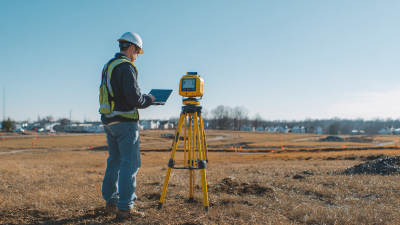
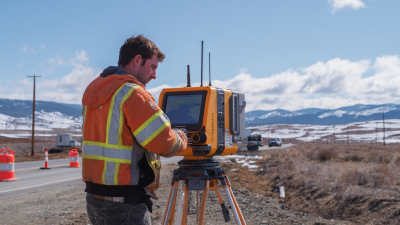
Mini RTK GPS technology has gained traction in precision surveying due to its compact size and high accuracy. These devices are small enough to be easily transported and set up in various environments. Surveyors benefit from their ability to provide real-time positioning data, which is crucial for planning and executing construction projects.
The applications of Mini RTK GPS extend beyond just surveying. They are often used in agricultural mapping, where precise land measurements are essential. Farmers can accurately assess field boundaries and crop layouts. However, achieving accuracy can sometimes be challenging. Environmental factors, such as trees or buildings, may obstruct signals. This can lead to inaccuracies that must be monitored closely.
In urban areas, the use of Mini RTK GPS can be even more complex. Signal degradation is a common issue. Surveyors often need to conduct adjustments and re-evaluations. Despite these difficulties, the potential for improved data collection remains high. Continuous improvements in technology promise greater reliability for future applications in precision surveying.
Benefits of Using Mini RTK GPS for Accurate Positioning
Mini RTK GPS systems offer impressive benefits for precision applications. They achieve centimeter-level accuracy, which is crucial in fields like agriculture and construction. According to a recent industry report, the use of RTK technologies can increase operational efficiency by up to 30%. This accuracy minimizes errors in mapping and positioning, allowing professionals to save time and resources.
The compact size of Mini RTK GPS units enhances their versatility. They can easily fit onto drones or small machinery, making them suitable for various applications. Recent studies indicate that integrating Mini RTK GPS with Unmanned Aerial Vehicles (UAVs) can improve surveying accuracy by 50% compared to traditional methods. However, achieving optimal performance requires consistent satellite signals and proper calibration. Users must remain vigilant about environmental factors that could affect accuracy.
Despite their advantages, there are still challenges to fully consider. Mini RTK GPS can struggle in urban canyons or densely wooded areas. Signal obstructions often lead to inaccuracies that may compromise data integrity. This reality prompts users to evaluate their operation environments carefully. Ensuring proper setup and usage can make a significant difference in data quality and reliability.
Benefits of Using Mini RTK GPS for Accurate Positioning
The following chart illustrates the benefits of Mini RTK GPS technology in various precision applications based on three key performance indicators: Accuracy, Cost Efficiency, and Portability.
Comparing Mini RTK GPS with Traditional GPS Systems
Mini RTK GPS offers enhanced accuracy compared to traditional GPS systems. It uses real-time kinematic positioning to achieve centimeter-level precision. This is vital for applications like surveying, agriculture, and construction. The technology relies on base stations that correct signals. Traditional GPS systems often face limitations, typically offering accuracy within several meters.
One of the challenges with traditional GPS is signal interference. Urban environments or dense forests can degrade performance. Mini RTK GPS reduces these issues significantly. Yet, it also has its own hurdles. Setting up base stations can be time-consuming. Additionally, the technology requires continuous power sources, which can be a concern in remote areas.
In terms of usability, traditional GPS devices are easier to operate for casual tasks. Many users may find Mini RTK GPS too technical or complex. This might lead to frustration or improper usage. Each system has its strengths and weaknesses, and users must weight these carefully.
Future Trends in Mini RTK GPS Technology and Applications
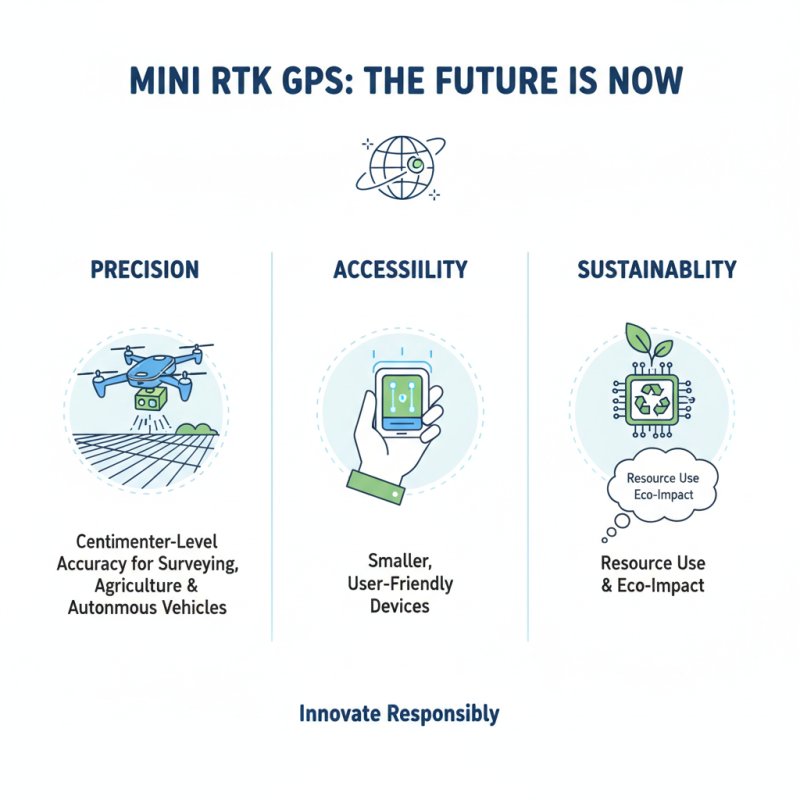
The future of Mini RTK GPS technology looks promising as more industries adopt it. These systems provide centimeter-level accuracy, which is vital for surveying, agriculture, and autonomous vehicles. Smaller devices are continually being developed, making them more accessible and user-friendly. As technology evolves, it’s essential to consider the environmental impact too. The resources used in manufacturing these devices raise questions about sustainability.
Integration with other technologies will enhance their capabilities. For example, combining Mini RTK GPS with drones can improve mapping and monitoring tasks. However, this also presents challenges. Manufacturers face the pressure to innovate quickly while ensuring reliability and performance. User training remains a barrier as well, highlighting the need for more intuitive designs.
Emerging technologies may influence Mini RTK GPS applications. The rise of edge computing and AI could enhance data processing and decision-making. Nonetheless, as we embrace these advancements, we must reflect on potential security issues. Data privacy and usage must remain a priority as sensor technologies become ubiquitous. Balancing innovation with responsibility is key.
Revolutionizing Precision Measurement: The AP30 Laser Dual-Cameras RTK GNSS Receiver with Advanced Technologies
In the evolving landscape of precision measurement, the AP30 Laser Dual-Cameras Rtk Gnss Receiver stands at the forefront with its cutting-edge technologies. This high-end GNSS receiver integrates the latest advancements in GNSS capabilities, Super IMU, and millimeter-level green laser technologies. Such innovations enable unprecedented accuracy and efficiency in various applications, from surveying to autonomous vehicle navigation.
Recent industry reports indicate that the global GNSS market is expected to grow significantly, driven by the increasing demand for high-precision positioning systems. According to a report by MarketsandMarkets, the GNSS market is projected to reach $345 billion by 2025, highlighting a compound annual growth rate (CAGR) of 8.6% over the next few years. The incorporation of advanced features like dual cameras enhances the receiver's ability to capture and process spatial data, ensuring that users can obtain millimeter-level precision in their measurements.
The integration of Super IMU technology addresses challenges posed by dynamic environments, providing stability and reliability in measurement outputs. As industries increasingly adopt automation and smart technologies, the demand for high-performance GNSS systems continues to rise. With solutions like the AP30 Laser Dual-Cameras RTK GNSS Receiver, professionals can leverage advanced technologies to meet the growing challenges of precision measurement, steering their operations toward greater accuracy and productivity.
Conclusion
Mini RTK GPS is a compact and advanced positioning technology designed for high-precision applications. It offers key features such as centimeter-level accuracy, versatility, and ease of integration into various systems. The technology functions through a network of base and rover stations, enabling real-time kinematic positioning that significantly enhances traditional GPS capabilities.
The applications of Mini RTK GPS are vast, especially in precision surveying, agriculture, and construction, where accuracy is critical. Its benefits extend to improved efficiency and reduction in errors compared to conventional GPS systems. As the demand for precise location data grows, future trends in Mini RTK GPS technology promise further enhancements in performance and accessibility, making it an essential tool for professionals seeking reliable positioning solutions.